Three in the morning and your eyes are wide open. You are not hungry.

Three in the morning and your eyes are wide open. You are not hungry. You are not in pain. But your brain is replaying the meeting from yesterday and rehearsing the one tomorrow. This is what worker stress actually does to a body. It does not clock out when you do.
Most people reach for sleep hygiene tips at this point. Dim the lights. Put the phone down. Avoid caffeine after noon. These things are not wrong, but they treat the surface. The cortisol still spikes at 11pm. The nervous system still reads “threat.” And the sleep stays broken. Something deeper needs addressing first.
Table Of Contents:
What Worker Stress Does to Your Body at Night
When you are under sustained work pressure, your body keeps producing cortisol well past the point it should be winding down. Cortisol is the hormone your system uses to keep you alert and responsive. In short bursts it is genuinely useful. Left running in the background night after night, it blocks the natural rise of melatonin that your body needs to actually fall asleep.
This is not a sleep problem. It is a stress response that has spilled into the wrong hours.
The World Health Organization identified burnout from chronic work pressure as an occupational phenomenon, noting exhaustion, mental detachment, and reduced effectiveness as its core features. These are not signs of weakness. They are what happens to a nervous system that has been running hot for too long without a proper reset.
The longer this goes on, the harder the pattern is to break with willpower alone. Fragmented sleep makes the stress harder to manage the next day. Harder-to-manage stress makes the sleep worse the following night. The cycle feeds itself.
Why Standard Fixes Stop Working
Melatonin supplements, blackout curtains, and sleep tracking apps. People try these things and get some improvement for a week or two, then plateau. The reason is straightforward: none of them address the nervous system. They work on the environment or the surface symptoms. The body is still in a low-grade state of alertness underneath.
This is the gap that traditional Ayurvedic medicine was built around long before modern sleep science had language for it.
What Ayurveda Has Always Known About Worker Stress and Sleep
Ayurveda does not separate the mind and body into different departments. Chronic overwork, irregular schedules, too much screen stimulation, skipped meals, not enough stillness. In Ayurvedic terms these factors together aggravate the Vata dosha, which governs the nervous system and mental activity. When Vata runs excessively, the mind cannot settle. It keeps generating activity even when the body is exhausted.
The approach is not to sedate the mind from outside. It is to give the nervous system the specific inputs that tell it, physically, that the threat has passed. Warm oil, rhythmic movement, continuous gentle sensation. These are not luxury spa features. They are deliberate therapeutic tools.
Shirodhara and What It Actually Does
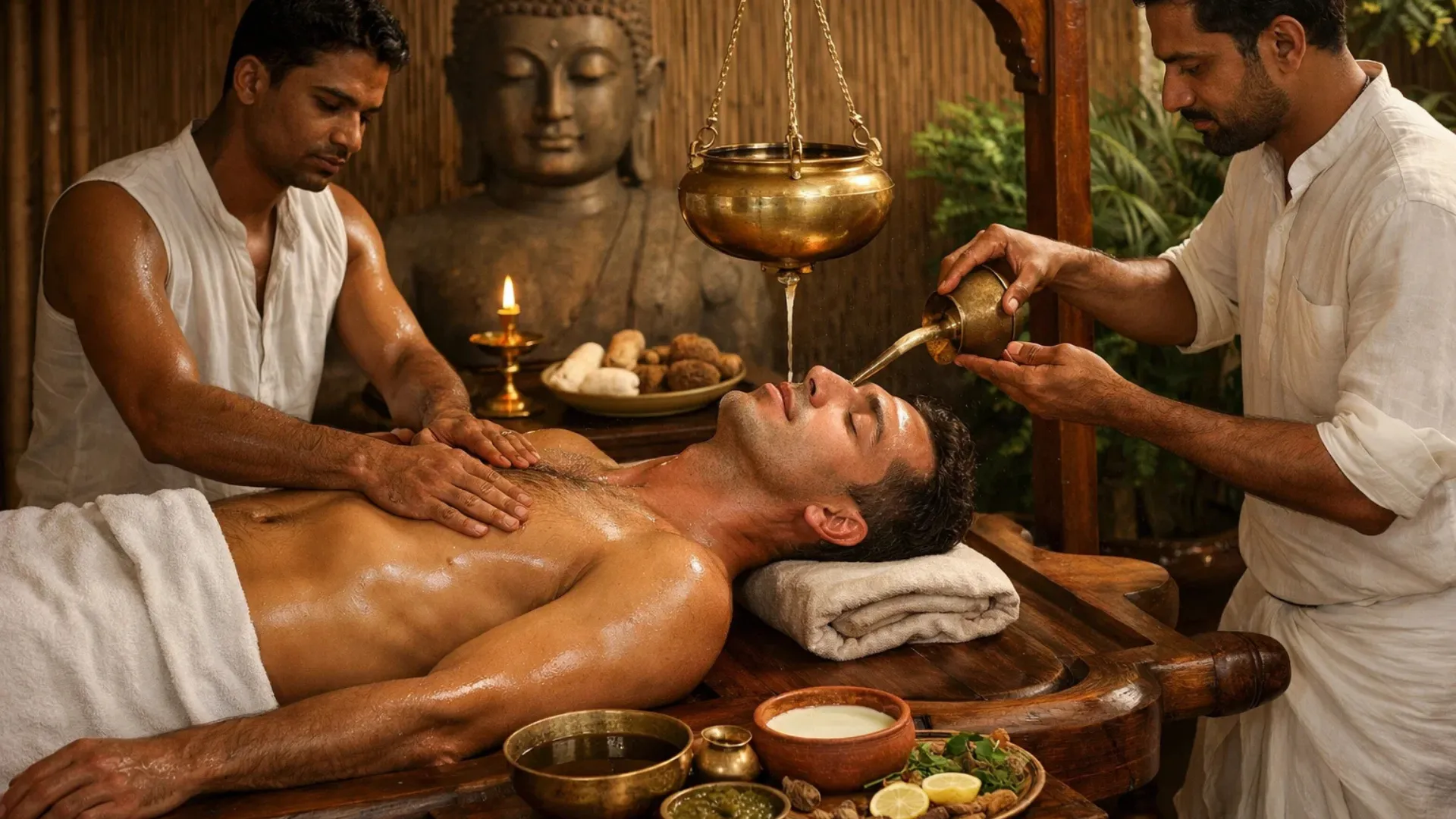
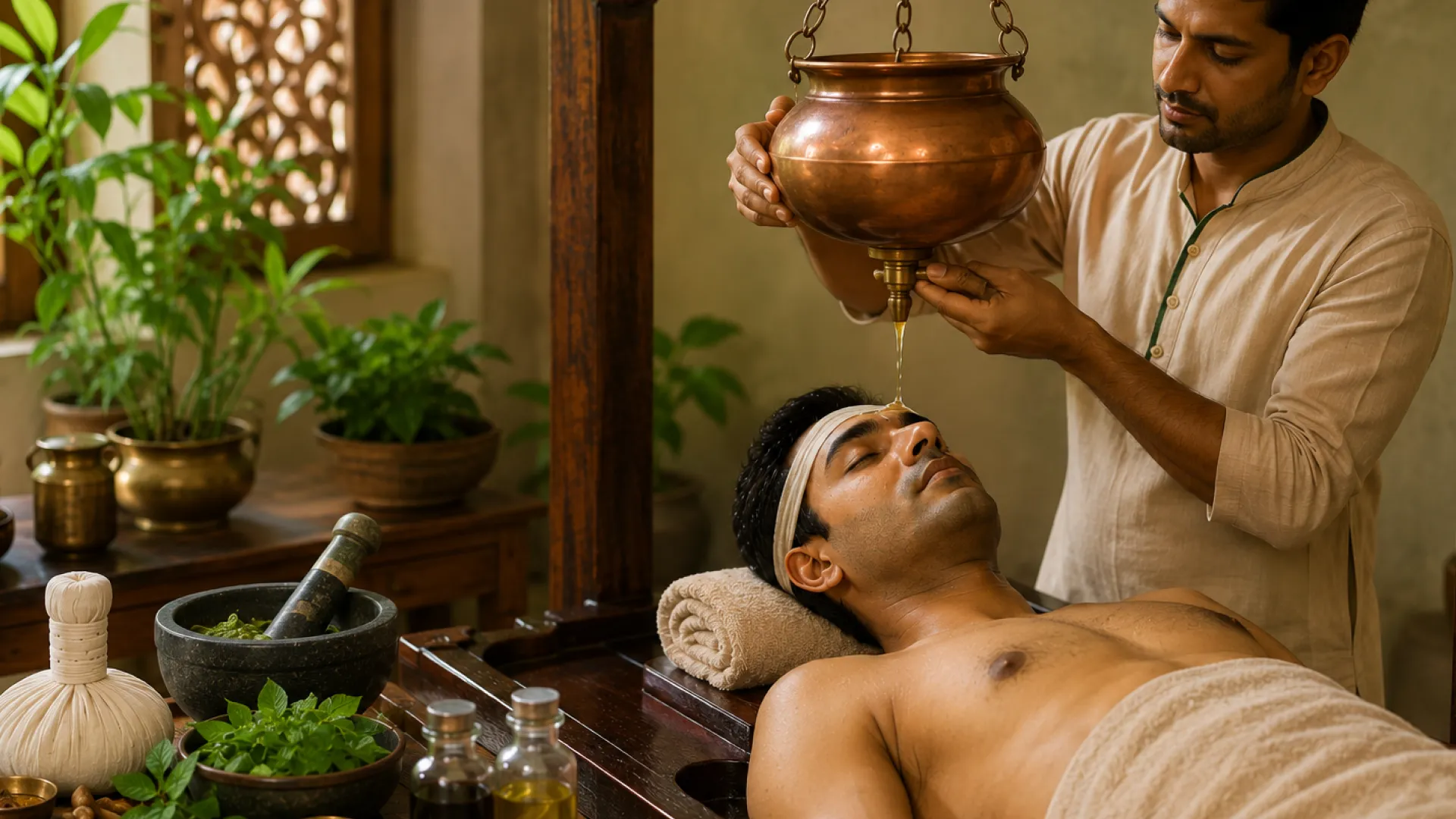
Shirodhara involves a continuous, thin stream of warm medicated oil poured slowly across the forehead. The stream moves in a pendulum rhythm. Sessions typically run between 45 and 60 minutes.
What happens during that time is measurable. Heart rate slows. Muscle tension releases. Brainwave activity shifts toward the patterns associated with deep rest. Studies have shown reductions in anxiety markers and improvements in sleep quality following a course of Shirodhara sessions.
At Brahmi Ayurvedic Clinic in Al Karama, Dubai, the medicated oil used in Shirodhara is selected based on the individual’s constitution and presentation. Someone whose sleep problems come with anxiety and racing thoughts gets a different formulation than someone whose primary issue is physical exhaustion. The treatment is the same. The medicine inside it is not.
Abhyangam for the Body That Carries the Stress
Worker stress does not just live in the mind. Tight shoulders. A jaw that is clenched all day. Headaches that build from the base of the neck. The body accumulates physical tension that does not disappear when the work stops.
Abhyangam is a full-body warm oil massage using herbal oils specific to the individual. The rhythm and pressure are deliberate. This is not a relaxation massage in the commercial sense. The oil penetrates into the tissue. The strokes work along the body’s channels to shift stagnation, support lymphatic movement, and directly calm the nervous system. People who come in wound tight regularly report that the quality of their sleep changes noticeably in the days following a session.
Pizhichil When the Tension Has Gone Deep
Some people carry stress in a way that goes beyond a stiff neck. Muscles that are chronically contracted. Joints that feel locked. A body that has been braced for too long. Pizhichil works at this level.
Warm medicated oil is applied continuously to the body using cloth, maintained at a consistent temperature throughout. The sustained warmth and oil together reach deeper into the tissue than standard massage. It is particularly suited to people whose worker stress has accumulated physically over months or years, rather than being a recent development.
Panchakarma Detox for a Deeper Reset
If the stress has been building for a year or more, single sessions help but may not shift the underlying pattern. Panchakarma is a multi-day supervised program that works at a cellular level. In Ayurveda, prolonged stress and irregular living accumulate ama, which is metabolic waste that blocks the body’s normal channels and disrupts function.
Panchakarma at Brahmi Dubai involves preparatory oil therapies, including Abhyangam and Shirodhara, followed by specific internal cleansing procedures guided by the clinic’s Ayurvedic physicians. It is not a detox juice fast. It requires slowing down significantly for the duration. Most people who go through it report a level of rest and mental clarity that they had forgotten was possible.
Small Adjustments That Support the Therapies
Clinical treatment works better alongside some basic routine changes. Eating the largest meal at midday rather than in the evening supports digestion, which directly affects sleep quality in Ayurvedic understanding. Consistent sleep and wake times, even at weekends, help regulate cortisol rhythm over time. Reducing bright screen exposure in the last hour before bed lowers the stimulation load on the nervous system.
None of these are dramatic. They work with how the therapies start.
Final Thoughts
Worker stress that has been building for months does not unwind in a single good night’s sleep. The body needs more than a better pillow. It needs the nervous system to genuinely come down from the state it has been holding.
Ayurvedic therapies at Brahmi Dubai work at that level. Not by forcing sleep, but by giving the body the conditions it needs to find it again on its own.
If your nights have felt like a continuation of your workday for longer than you can remember, what would it actually be worth to address the cause rather than just the symptom?
FAQ
Can Ayurvedic treatment genuinely help with work stress and poor sleep?
It depends on how you approach it. Booking a one-off session and expecting a permanent fix is not realistic. But a course of treatments, particularly Shirodhara combined with Abhyangam over two to three weeks, works on the nervous system in a way that most people have not experienced before. The research behind it is real. The key is working with a proper Ayurvedic physician who assesses you first, not just picking treatments off a menu.
How quickly does Shirodhara start working for sleep problems?
Most people notice a difference in how they feel within the first session. Whether that translates into sustained sleep improvement depends on how long the problem has been building. Someone three months into bad sleep may notice change faster than someone who has been running on empty for two years. A course of seven to fourteen sessions is a common recommendation for lasting results.
Is Panchakarma Detox something I can fit around a full-time job?
Not really, and trying to do it halfway undermines the program. Panchakarma requires the body to be in a low-stimulation state to work properly. Most people plan it around annual leave. The clinic can help you figure out timing and what the program realistically involves before you commit.
I take prescribed medication for sleep or anxiety. Can I still have Ayurvedic treatments?
Bring this up directly with the Ayurvedic physician at Brahmi before any session. Ayurvedic therapies generally complement conventional care rather than replacing it, but the clinic needs your full health picture to advise you properly. Do not adjust or stop any prescribed medication without speaking to the doctor who prescribed it.